
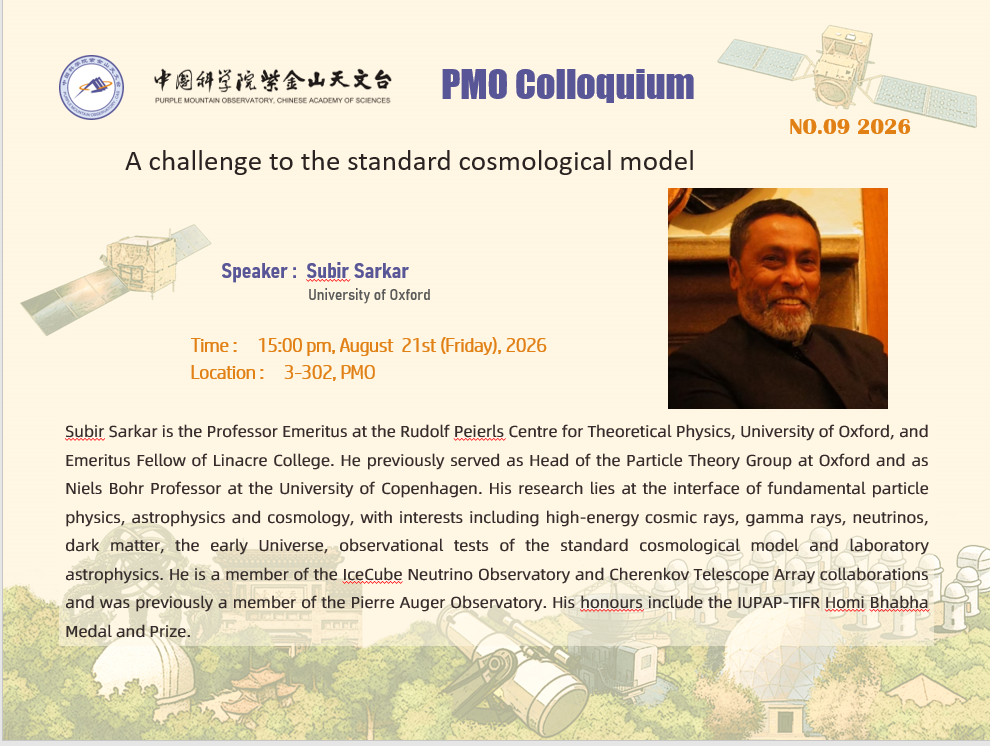
In the fiducial ΛCDM model, the Universe is assumed to be isotropic and homogeneous when averaged on large scales. That the cosmic microwave background has a dipole anisotropy is interpreted as due to our peculiar (non-Hubble) motion because of local inhomogeneity. A similar dipole is then expected in the sky distribution of distant sources. Using independent catalogues of radio galaxies and quasars, we find however that the amplitude of the matter dipole is a factor of 2–3 bigger than predicted, i.e. the distribution of distant matter is not isotropic in the “Cosmic Rest Frame”. This calls into question all standard analyses of cosmological data which are done after boosting to this frame, in particular to infer using Type Ia supernovae that the Hubble expansion rate is accelerating, which is interpreted as due to a Cosmological Constant Λ or more general dark energy. In fact this acceleration too is anisotropic—so cannot be due to the quantum vacuum—but is likely an effect of our local peculiar bulk flow.
Key references: Rev. Mod. Phys. 97, 041001 (2025); Mon. Not. R. Astron. Soc. 549, stag844 (2026).
 附件下载:
附件下载:


创新文化